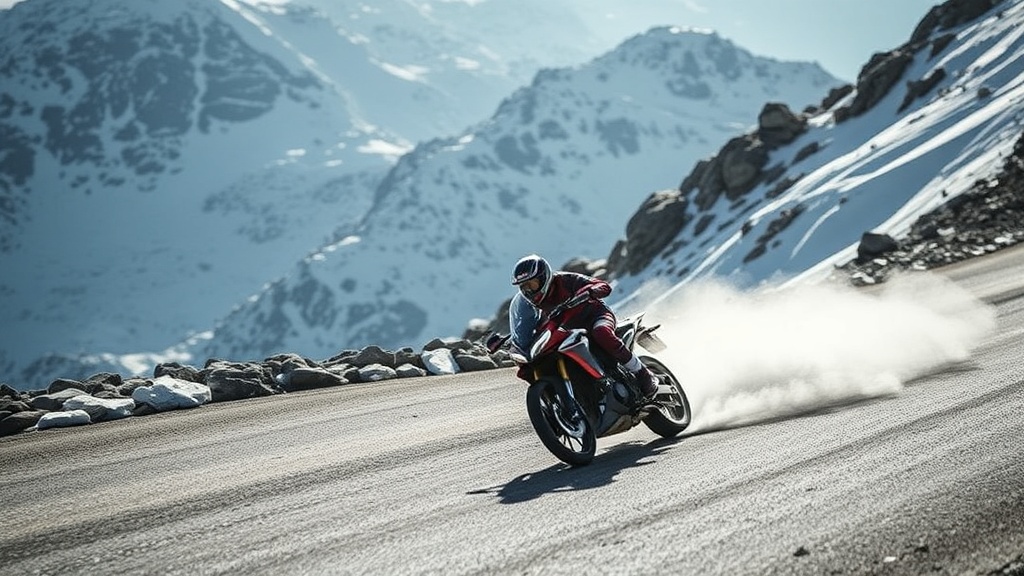
How to Corner with Confidence on Fast Descents

You're halfway down a mountain pass, speed creeping past 50 km/h, and the road ahead throws a blind left-hander at you. Your hands tighten. Your shoulders rise. You tap the brakes nervously and feel the bike wobble. By the time you exit the corner, you've lost all your momentum—and worse, you feel like you got lucky. Every road cyclist knows this moment. Cornering downhill isn't just about bravery; it's about technique, timing, and trusting your equipment. Get it right, and descents become the reward for all that climbing. Get it wrong, and you'll always dread the way down.
Why Descending Confidence Matters More Than You Think
Poor cornering technique doesn't just slow you down—it drains your mental energy and increases crash risk. Riders who white-knuckle every descent arrive at the bottom tense, tired, and sometimes shaken. The irony? Descending should be recovery time. Your heart rate drops, your legs rest, and you prepare for the next effort. But that only happens when you have the skills to relax into the bike.
The good news: cornering is a learned skill, not an innate gift. Professional cyclists weren't born railing switchbacks at 80 km/h. They practiced specific techniques, built progressive confidence, and learned to read the road. You can do the same—whether you're tackling Alpine cols or your local canyon descent.
How Should You Position Your Body for Maximum Control?
Body position is everything. When you descend standing on the pedals or sitting stiffly upright, you create two problems: your center of gravity stays too high, and your arms can't absorb road feedback. Instead, adopt the "attack position."
Drop your heels so your weight anchors through the pedals, not your hands. Bend your elbows deeply—think chicken wings, not locked arms. Lower your chest toward the stem. This lowers your center of gravity and puts more weight over the front wheel, which is exactly where you want traction when cornering.
Here's the counterintuitive part: grip the hoods lightly. White-knuckling creates tension that telegraphs into the bike. Your hands should feel like they're resting on the bars, not strangling them. When you need to brake, your fingers are already in position on the levers. When you don't, you're free to steer smoothly.
Your head position matters too. Look through the corner to your exit point—not at your front wheel, not at the guardrail you're afraid of hitting. Your bike goes where your eyes go. Fixate on the pothole, and you'll hit it. Look at the clean line through the apex, and your body will subconsciously guide you there.
When Should You Brake—and When Should You Let the Bike Run?
The biggest mistake intermediate riders make is braking while cornering. Once you're leaned over, your tires are already working hard to maintain traction. Adding brake force pushes them closer to the limit—and sometimes past it. The result? A skid, a slide, or worse.
Instead, follow this rule: slow in, fast out. Do all your braking before you enter the corner. Release the levers completely as you initiate the turn. If you've judged your speed correctly, you'll feel the bike accelerate naturally through the apex. If you haven't, better to brake harder before the turn than during it.
On long descents with multiple corners, modulate your braking. Dragging brakes continuously overheats your rims (or rotor) and creates a false sense of security. Instead, brake hard for short bursts between corners, then release completely and coast through the turns. Your brake pads last longer, your hands cramp less, and you maintain better control.
Front brake versus rear? On dry pavement, your front brake provides 70-80% of your stopping power. Use it—but progressively. Grab it suddenly and you'll go over the bars. Squeeze it smoothly, shifting your weight back slightly to counter the forward momentum.
What's the Fastest Line Through a Corner?
Road cyclists talk about the "racing line"—and for good reason. It maximizes your radius through a turn, which means you can carry more speed. The formula is simple: enter wide, cut to the apex, exit wide. On a right-hand corner, that means starting near the center line (or safely near it), touching the inside of the curve at the sharpest point, then drifting back toward the center as you straighten up.
But there's a catch: this line assumes you can see through the corner. Blind turns demand caution. Enter slower, stay wider longer, and don't commit to the apex until you can see your exit. The same applies to corners with debris, wet patches, or oncoming traffic that might cut the corner. The fastest line is worthless if it puts you in the hospital.
Practice reading the road as you approach. Look for visual cues: telephone poles that reveal the curve's radius, shadows that indicate surface changes, tire marks from other vehicles. Experienced descenders process this information unconsciously, adjusting their line and speed before they even think about it.
The Role of Countersteering
Here's a technique that sounds wrong but works: to initiate a turn, you actually steer away from it momentarily. This is called countersteering, and it's how motorcycles and bicycles actually change direction at speed. A light pressure on the inside handlebar drops the bike into the lean. Once you're at the desired angle, neutral pressure keeps you there.
You already do this unconsciously on gentle curves. The key is recognizing it and using it deliberately on tighter corners. Don't wrench the bars—just a gentle push initiates the lean. The faster you're going, the more effective this technique becomes.
How Can You Build Descending Confidence Progressively?
You won't transform from nervous descender to mountain goat overnight. Confidence builds through deliberate practice on familiar roads. Start with this progression:
Step one: Find a descent you know well—one you've ridden dozens of times. Ride it repeatedly, focusing on one technique per session. Today, it's body position. Tomorrow, it's braking points. Build muscle memory in a safe, predictable environment.
Step two: Follow a more confident rider (at a safe distance). Watch their line choice, their brake timing, their body position. Visual learning accelerates skill acquisition. If you can't ride with someone faster, watch descending technique videos from reputable coaches like Cycling Weekly or BikeRadar.
Step three: Gradually increase your comfort zone. Once a descent feels easy, add speed. Find a slightly steeper or twistier road. The goal isn't to match professional speeds—it's to expand your personal threshold while maintaining control.
Equipment Considerations
Your bike setup affects descending confidence. Wider tires (25mm or 28mm) at appropriate pressures provide better grip and comfort than narrow, rock-hard rubber. Check your brake pads regularly—descending on worn pads is genuinely dangerous. Consider upgrading to wider, more ergonomic handlebar tape for better grip when your palms sweat.
Suspension isn't just for mountain bikes. Some endurance road bikes now feature minimal front suspension or flex-stem designs that absorb high-frequency vibration without affecting power transfer. If you struggle with hand numbness on descents, these innovations might help.
What About Weather and Road Conditions?
Wet roads demand respect—and different technique. Reduce your speed by 20-30% in the rain. Brake earlier and more gently. Avoid painted lines, manhole covers, and leaves, which become slick when wet. Your tires have less grip, so your lean angle must decrease accordingly.
Cold weather brings its own challenges. Brake levers feel harder when your hands are numb. Tire rubber stiffens and loses compliance. Descend more conservatively on chilly mornings, especially if you haven't warmed up properly.
Finally, remember that local knowledge is invaluable. A descent you've ridden fifty times in perfect conditions might surprise you with gravel washout after a storm, or diesel spills near intersections. Stay alert, stay humble, and never assume a familiar road is unchanged.
"The best descenders aren't the bravest—they're the most prepared."
Cornering confidence transforms your cycling experience. Suddenly, those long mountain routes become loops you look forward to instead of dread. You'll save energy, reduce risk, and discover that the downhill can be as rewarding as the climb. Start with technique, build through repetition, and respect the variables you can't control. The mountain isn't going anywhere—and neither are you, if you ride smart.