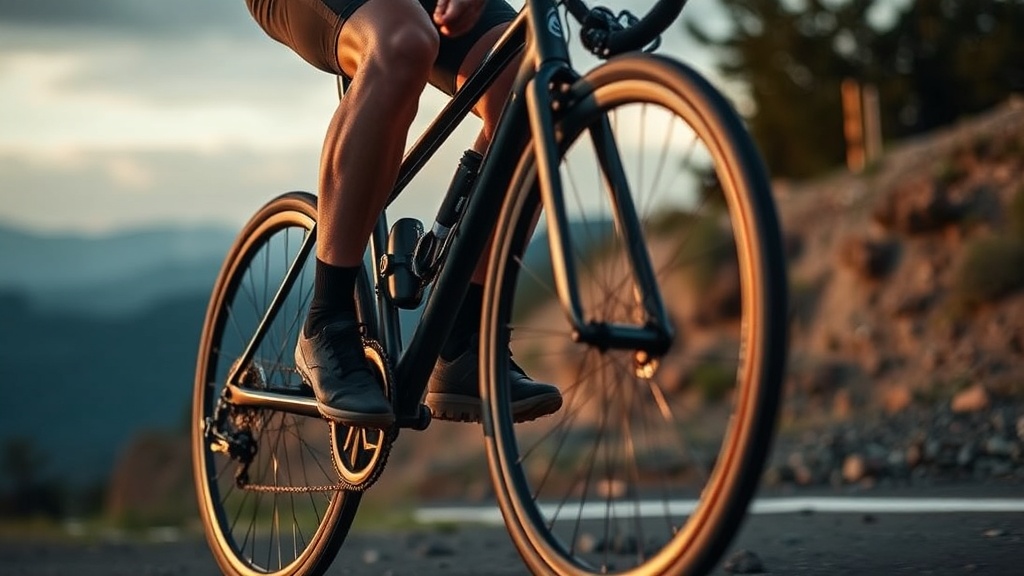
Why Your Knees Hurt After Every Long Ride — And What Actually Fixes It

Most cyclists assume knee pain is just part of the sport — something you push through until your body "adapts." That belief is not only wrong; it is actively damaging. Knee discomfort is not a badge of honor or a sign you are training hard. It is a signal that something in your setup, movement patterns, or recovery is out of alignment. Ignoring it does not build toughness — it creates chronic injuries that can sideline you for months.
This post breaks down the real reasons cyclists experience knee pain and delivers practical, evidence-backed fixes you can implement immediately. No gimmicks. No equipment shilling. Just straight talk about what works.
Is Your Saddle Height Destroying Your Knees?
Let us start with the obvious culprit: saddle position. A saddle set too low forces your knees to bend excessively at the top of the pedal stroke — compressing the patellar tendon and overworking the quadriceps. Too high, and you are hyperextending with every downstroke, straining the hamstrings and irritating the IT band.
The old heel-on-pedal method? It is a starting point — not gospel. Your ideal saddle height depends on crank length, shoe stack height, and your individual femur-to-tibia ratio. A professional bike fit (BikeRadar has an excellent breakdown of fit fundamentals) measures these variables with precision. If you cannot spring for a fit session right now, try this: ride at a moderate effort and notice if your hips rock side-to-side. Rocking means you are overreaching. Drop the saddle 2-3mm and test again.
Knee angle matters too. At the bottom of your pedal stroke (6 o'clock position), you want approximately 25-35 degrees of knee flexion. Any less, and you are likely too high. Any more, and you are compressing the joint with every revolution — multiply that by 5,000+ strokes per hour, and you see why pain develops.
Are You Mashing Gears Instead of Spinning Smoothly?
Here is a hard truth: big gears build ego, not sustainable power. Pushing a heavy gear at low cadence (below 70 RPM) generates massive torque through the knee joint. Your quadriceps fire aggressively to overcome resistance, and the patellar tendon absorbs the shock. Over time, this creates anterior knee pain — that dull ache below or around your kneecap that flares up on climbs.
Spinning is not just for racers. Aim for 80-90 RPM on flat terrain and do not drop below 75 RPM on sustained climbs. Yes, it feels less powerful initially. Yes, your heart rate climbs. But spreading the workload across more pedal strokes reduces peak joint stress dramatically. Think of it like lifting: ten reps at moderate weight beats five reps at maximum load when joint health is the priority.
Practice high-cadence drills twice weekly. Find a flat stretch, shift two gears easier than comfortable, and hold 100+ RPM for five-minute intervals. It will feel awkward. Your hips might bounce. Stick with it — neuromuscular coordination improves within weeks, and your knees will thank you.
Does Your Cleat Position Need a Second Look?
Cleat alignment is the silent killer of knee health. Misaligned cleats force your knees to track inward or outward — fighting against natural biomechanics with every stroke. Most riders set cleats based on guesswork or copy their friends' positions. This is gambling with your joints.
Your foot's natural angle when walking (toe-in or toe-out) should match your cleat setup. Forcing a toe-forward position when your anatomy prefers slight external rotation creates torsional stress at the knee. The solution? Stand barefoot and notice how your feet naturally settle. Replicate that angle on the bike.
Fore-aft position matters equally. The ball of your foot should sit directly over the pedal spindle — not ahead, not behind. Too far forward overloads the calf and Achilles; too far back shifts stress to the quads and patellar tendon. Mark your current position before adjusting, then move cleats in 2mm increments until you find relief.
What Role Does Hip Stability Play in Knee Pain?
Your knee is a simple hinge joint trapped between two complex systems: the ankle below and the hip above. When hip stabilizers (gluteus medius, piriformis, deep core) are weak or inactive, the knee collapses inward during the power phase — a movement pattern called valgus collapse. This creates lateral tracking issues, IT band friction, and medial compartment compression.
Strengthening your hips is not optional maintenance; it is injury prevention. Single-leg exercises expose these weaknesses fast. Try single-leg Romanian deadlifts, lateral band walks, and Bulgarian split squats — movements that force your glute medius to fire while mimicking the single-leg demands of cycling. TrainingPeaks outlines several cyclist-specific hip exercises worth incorporating.
Activation matters as much as strength. Before rides, spend five minutes waking up dormant glutes. Clamshells, monster walks with a resistance band, and single-leg bridges prime the muscles that keep your knee tracking properly. Skip this, and you are asking irritated tissue to handle load without proper support.
Are You Giving Your Knees Enough Recovery Time?
Cycling is low-impact — but it is still repetitive stress. The same motion, thousands of times per ride, creates micro-trauma in tendons and cartilage. Without adequate recovery, that trauma accumulates faster than your body can repair it. The result? Chronic tendinopathy, bursitis, or early degenerative changes.
Rest days are not weakness. They are when adaptation happens. Tendons — particularly the patellar tendon — have poor blood supply compared to muscles. They heal slowly. Piling hard rides on irritated tissue guarantees long-term problems. Learn to read your body's signals: morning stiffness, pain that warms up then returns later, or discomfort when climbing stairs are all warning signs.
Active recovery beats complete immobility. Light spinning, walking, or swimming promotes blood flow without loading the joint aggressively. Foam rolling the quads, IT band, and calves (yes, tight calves pull on the knee indirectly) helps maintain tissue quality between hard efforts. And sleep — actual, quality sleep — is when growth hormone releases and tissue repair accelerates. Cycling Weekly's comprehensive guide on knee pain emphasizes recovery as a non-negotiable component of knee health.
When Should You See a Professional?
Self-management works for minor irritation, but some symptoms demand expert intervention. Sharp, localized pain — especially on the medial or lateral joint line — can indicate meniscal issues or ligament damage. Swelling, locking, or instability are red flags requiring medical imaging. Do not let pride or stubbornness turn a treatable problem into surgery.
Sports medicine physicians and physical therapists who work with cyclists understand the unique demands of our sport. A general practitioner might tell you to stop riding entirely; a cycling-savvy PT will identify movement dysfunction and modify your setup while keeping you active. Find someone who speaks your language.
Knee pain is not inevitable. It is feedback — sometimes about equipment, sometimes about technique, sometimes about recovery habits. Listen early, adjust quickly, and you will enjoy more miles with less misery. The cyclists who stay strong into their fifties and sixties are not genetically gifted; they are mechanically smart and injury-averse.